英语长篇文章2000词?The teenager was grateful and got great power from his friend?s words. Now, he has recovered from being upset and has fallen in love with English.有个少年躲在积满灰尘的松散窗帘后把大衣装入手提箱。尽管外面正打雷闪电, 他仍计划在黄昏时分离家出走。那么,英语长篇文章2000词?一起来了解一下吧。
《悲惨世界》
After nineteen years of imprisonment for stealing food for his starving family, the peasant Jean Valjean is released. However, he is required to carry a yellow ticket, which marks him as a convict. Rejected by innkeepers, who do not want to take in a convict, Valjean sleeps on the street. However, the benevolent Bishop Myriel takes him in and gives him shelter. In the night, he steals the bishop’s silverware and runs. He is caught, but the bishop rescues him by claiming that the silver was a gift and at that point gives him two candlesticks as well. The bishop then tells him he must become an honest man and must perform good deeds for others.
Six years later, Valjean has become a wealthy factory owner and is appointed mayor of his adopted town, having broken his parole and assumed the pseudonym of Monsieur Madeleine to avoid capture by Inspector Javert, who has been pursuing him. Fate takes an unfortunate turn when another man, mistakenly accused of being Valjean, is put on trial, forcing the real Valjean to reveal his true identity. At the same time, Valjean meets the dying Fantine, who has been fired from her job at his factory and has resorted to prostitution. She has a young daughter, Cosette, who lives with a corrupt innkeeper and his selfish, cruel wife. As Fantine dies, Valjean, seeing in Fantine similarities to his former life of hardship, promises her that he will take care of Cosette, despite imminent arrest by Javert. He pays off the innkeeper, Thénardier, to obtain Cosette, and flees with her to Paris. Once in Paris, they find shelter in a convent. Not allowed to search the convent, Javert is unable to find the pair.
Ten years later, as Cosette and Valjean are leaving the convent, angry students, led by Enjolras, are preparing a revolution on the eve of the Paris uprising on June 5–6, 1832, following the death of General Lamarque, the only French leader who had sympathy towards the working class. They are also joined by the poor, including the young street urchin Gavroche. One of the students, Marius Pontmercy, who has become alienated from his family because of his liberal views, falls in love with Cosette, who has grown to be very beautiful. The Thénardiers, who have also moved to Paris, lead a gang of thieves to raid Valjean’s house while Marius is visiting. However, Thénardier’s daughter, Éponine, who is also in love with Marius, convinces the thieves to leave.
The following day, the students revolt and erect barricades in the narrow streets of Paris. Valjean, learning that Cosette's lover is fighting, joins them in order to protect Marius. Éponine also joins to protect Marius, and ends up taking a bullet for him and dying happily in his arms. During the ensuing battle, Valjean saves Javert from being killed by the students and lets him go. Valjean carries off the injured Marius, but many others, including Enjolras and Gavroche, are killed. Valjean escapes through the sewers, carrying Marius' body on his shoulders. At the exit, he runs into Javert, whom he persuades to give him time to return Marius to his family. Javert grants this request and another, then realises that he is caught between his belief in the law and the mercy Valjean has shown him, as he can no longer give Valjean up to the authorities. Unable to cope with this dilemma, Javert kills himself. Marius and Cosette are soon married. Valjean loses his strength to live, since Cosette no longer needs him. Marius is convinced Valjean is of poor moral character and steers Cosette away from him. Marius learns of Valjean's good deeds too late and rushes to Valjean's house, where he lies dying. Valjean reveals his past to the pair, and in his final moments realises happiness at long last with his adopted daughter and son-in-law by his side. He expresses his love to them, and then dies.

你好,这两篇文章加起来就符合你的要求了
字数【1040】
这篇文章是一个关于外貌的深度探讨,非常有哲理,作者观点也十分有个性,强力推荐。
Beauty
Susan Sontag
For the Greeks, beauty was a virtue: a kind of excellence. Persons then were assumed to be what we now have to call – lamely, enviously – whole persons. If it did occur to the Greeks to distinguish between a person’s “inside” and “outside”, they still expected that inner beauty would be matched by beauty of the other kind. The well-born young Athenians who gathered around Socrates found it quite paradoxical that their hero was so intelligent, so brave, so honorable, so seductive – and so ugly. One of Socrates’ main pedagogical acts was to be ugly and teach those innocent, no doubt splendid-looking disciples of this how full of paradoxes life really was.
2They may have resisted Socrates’ lesson. We do not. Several thousand years later, we are more wary of the enchantments of beauty. We not only split off – with the greatest facility – the “inside” (character, intellect) from the “outside”(looks); but we are actually surprised when someone who is beautiful is also intelligent, talented, good.
3It was principally the influence of Christianity that deprived beauty of the central place it had in classical ideals of human excellence. By limiting excellence (vritus in Latin) to moral virtue only, Christianity set beauty adrift – as an alienated, arbitrary, superficial enchantment. And beauty has continued to lose prestige. For close to two centuries it has become a convention to attribute beauty to only one of the two sexes: the sex which, however Fair, is always Second. Associating beauty with women has put beauty even further on the defensive, morally.
4A beautiful woman, we say in English. But a handsome man. “ Handsome” is the masculine equivalent of – and refusal of – a compliment which has accumulated certain demeaning overtones, by being reserved for women only. That one can call a man “beautiful in French and in Italian suggests that Catholic countries – unlike those countries shaped by the Protestant version of Christianity – still retain some vestiges of the pagan admiration for beauty. But the difference, if one exists, is of degree only. In every modern country that is Christian or post-Christian, women are the beautiful sex – to the detriment of the notion of beauty as well as of women.
5To be called beautiful is thought to name something essential to women’s character and concerns. (In contrast to men – whose essence is to be strong, or effective, or competent) it does not take someone in the thrones of advanced feminist awareness to perceive the they way women are taught to be involved with beauty encourages narcissism, reinforces dependence and immaturity. Everybody (women and men) knows that. For it is “everybody”, a whole society, that has identified being feminine with caring about how one looks. (In contrast to being masculine – which is identified with caring about what one is and does and only secondarily, if at all, about how one looks.) Given these stereotypes, it is no wonder that beauty enjoys, at best, a rather mixed reputation.
6It is not, of course, the desire to be beautiful that is wrong but the obligation to be – or to try. What is accepted by most women as a flattering idealization of their sex is a way of making women feel inferior to what they actually are – or normally grow to be. For the ideal of beauty is administered as a form of self-oppression. Women are taught to see their bodies in parts, and to evaluate each part separately. Breasts, feet, hips, waistline, neck, eyes, nose, complexion, hair, and so on – each in turn is submitted to an anxious, fretful, often despairing scrutiny. Even if some pass muster, some will always be found wanting. Nothing less than perfection will do.
7In men, good looks is a whole, something taken in at a glance. It does not need to be confirmed by giving measurements of different regions of the body, nobody encourages a man to dissect his appearance, feature by feature. As for perfection, that is considered trivial – almost unmanly. Indeed, in the ideally good-looking man a small imperfection or blemish is considered positively desirable. According to one movie critic ( a women) who is a declared Robert Redford fan, it is having that cluster of skin-colored moles on one cheek that saves Redford from being merely a “ pretty face”. Think of the depreciation of women – as well as of beauty – that is implied in that judgment.
8“The privileges of beauty are immense,” said Cocteau. To be sure, beauty is a form of power. And deservedly so. What is lamentable is that it is the only form of power that most women are encouraged to seek. This power is always conceived in relation to men; it is not the power to do but the power to attract. It is a power that negates itself. For this power is not one that can be chosen freely – at least, not by women – or renounced without social censure.
9To preen, for a woman, can never be just a pleasure. It is also a duty. It is her work. If a woman does real work – and even if she has clambered up to a leading position in politics, law, medicine, business, or whatever—she is always under pressure to confess that she still works at being attractive. But it so far as she is keeping up as one of the Fair Sex, she brings under suspicion her very capacity to be objective, professional, authoritative, thoughtful. Damned if they do—women are. And damned if they don’t.
10One could hardly ask for more important evidence of the dangers of considering persons as split between what is “inside” and what is “outside” than that interminable half-comic half-tragic tale, the oppression of women. How easy it is to start off by defining women as caretakers of their surfaces, and then to disparage them ( or find them adorable) for being “superficial”. It is a crude trap, and it has worked for too long. But to get out of the trap requires that women get some critical distance from that excellence and privilege which is beauty, enough distance to see how much beauty itself has been abridged in order to prop up the mythology of the “feminine”. There should be a way of saving beauty from women – and for them.
From: J. Trimmer and M. Hairston, pp.300-304.
字数【446】
这篇文章说的是有一种能力对于我们来说很重要,叫“恢复速度”,就是从沮丧中回到平衡的速度,这个是现代成功人士的一种重要指标。
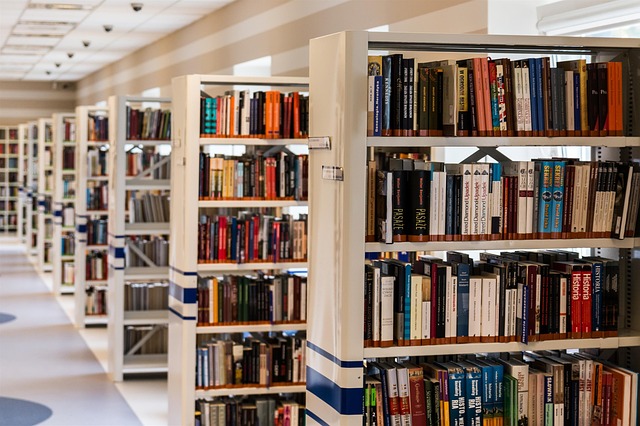
Amazing Intelligent Transportation
According to the Beijing Traffic ManagementBureau of Statistics data show that the rapid growth of motor vehicles is much higher than the construction of road traffic, then how to solve traffic congestion problems?
Intensive family car trip
1-11 months of last year's vehicle sales exceeded 10 million, an increase of 42.39%. Motor vehicles in Beijing from 3 million to 4 million spent only two years and six months, this growth is the transportation construction in any case can not match.
Yang, Tsinghua University, Research Associate, Institute of Transportation analysis of traffic jams formed Emerging Artists reasons that: "motor vehicle ownership and use of excessive growth, and road construction, traffic management, energy and talent development of the reserves can not keep up the speed of motor vehicles. In particular, the use of a motor vehicle, family car travel, Beijing, intensity (frequency and distance of travel) is 8 times the family without a car, so that relatively great pressure on road transport. "
Frequency of use of motor vehicles is a very important factor, only "four million" figure does not tell the whole story. Sample survey data show that the frequency of use of each car 5 times higher than the U.S., which increases the likelihood of traffic congestion.
According to deputy chief engineer of the Ministry of Communications Research Institute, Transportation Research Center, Jiang Yulin, director of sustainable development description: "The ownership of motor vehicles and road construction is unbalanced, and we are the construction of urban road space is constrained resource conditions, and only 10 % -15% of the urban space can be used for transportation construction. Beijing rapid rate of population growth, many of the current road network is compressed the original transform walking and bike paths, there are historical problems. "growth and use of motor vehicles is no doubt become the most direct reason for traffic jams.
In fact, any international city has undergone a rapid growth as a result of motor vehicle traffic congestion stage. Data shows that the late 70s of last century, the Tokyo motor 300 million, far more than the current congestion in Beijing, known as the "commuter hell." 1995, Seoul, South Korea reached 2,000,000 vehicles, already crowded, almost to the extent could not leave. Currently, the total motor vehicles in Tokyo nearly 800 million, but the traffic is better in Beijing, this is why?
Some experts believe that international experience shows that urban transport can be optimized through the management structure, differentiated charging policy to take reasonable limit car, the implementation of measures such as tail number limit line can ease the congestion to some extent.
Intelligent Transportation to improve road traffic management is to improve the utilization efficiency of urban road system, an effective way. According to Jiang Yulin describes: "the major cities are using the latest information technology to build intelligent traffic management system, GIS system management bus lines, installation of the bus map, e-stops, visual query to achieve the bus." These technology to facilitate people's travel. Such as Chang'an new traffic probe, which can automatically measure traffic junctions, thereby controlling the traffic lights change, is the visual impression of intelligent transportation.
Young Emerging Artists stressed: "Intelligent Transportation should be a full range of social services for the whole system, traffic data and related transportation information should be open to the entire community." Jiang Yulin who agree with this attitude, "The government should support intelligent transportation, cooperation on strengthening the management to change the public security and traffic situation of asymmetric information and data, better integration of traffic information and transit information. "
However, the traffic problem is a matter of economic, social, cultural and administrative complex system problems, many structural problems can not simply rely on can not be resolved, such as information technology. Tongji Intelligent Transport System (ITS) Research Center, Yang Xiaoguang that "when the basic pattern of the city and traffic is determined, including the use of information technology to improve the traffic problems may well be one of the measures, but the technology is no different from drugs alone is not symptomatic . promote the Intelligent Transport System technology, to fully achieve the government, industry and academia combine attention to the service function of intelligent transportation systems and industrial properties. "
Love
byToniMorrison
She'sdeadnow,soIcansaythatshelaughedlikeus,playedlikeus,andheradultlifeturnedoutokay–soIheard.Butthen,whenwewerealltwelveorless,itseemedasthoughshefloatedbehindascrim.Markedlypretty,shehadeyesfullofdistance–asmilemademoreattractivebywhatitwithheld;someknowingnessitappearedunwillingtoshare.Intheearlyforties,"cool"wasourwordtodescribeher,although,atthetime,Ithoughtshewassimplysad.Somethingtreasuredhadbeenirretrievablylost,andtherewasnothingtobedoneaboutit.HerattituderemindedmeofwhatIsawintheeyesofscaryoldpeoplesittinginrockingchairsontheporchorleaningonafencelookingatusasthoughinalittlewhilewewouldknowthedoomandcatastrophetheyalreadyknew."Uhhuh,"theymurmuredwhenwetrippedoverthedoorsaddleorruinedourclothes."Whereisyourmind?"theyaskedwhenwedroppedthemilkbottle,letthecoalfiregoout.Seriouslyaskingaseriousquestion,theyshowednosurprise.Theyknewwewouldalwaysfalldown,dropthings,beruined,andforget.Andthatitwaspossibletoloseyourmind.Shetooseemedawareofourhaplessness,butshedidnotweartheirfrown.Amournfulsympathyinfectedhersmile.
Thebigthing–themostobvioussignofherbehind-the-scrimlife–wasthatshedidn'tlikeboys.Thatis,shewasindifferenttoourgiggleandbabbleaboutwhowas"sharp"or"fine"orwho"liked"whom.Shemadenocontributiontosuchtalk.Verygrownup,Ithought,foratwelve-year-oldwhohadnoreasontobe.WhenIlearned,later,whatseparatedherfromus(fromtheworld,perhaps),Ibecameafraidofwakefulnessaswellasofsleep.Tryingtopicturetheactsfoisteduponherbyherfatherwasimpossible–outofrange.Nothingcameclearlyintoview.Theywereliterallyunimaginable.Whatwaseasilyimaginablewastheimplacabledangerbroughtonbythethingsthosescaryoldpeoplerecognizedinus.Ruin,falling,losing,mindlessnesswerenotonlyinournaturenow,theysignaledourfuture.Beforeweevenknewwhowewere,someonewetrustedourlivestocould,might,wouldmakeuseofourlittleness,ourignorance,ourneed,andsullyustothebone,disturbingthebalanceofourlivesastheirshadclearlybeendisturbed.
Whenthegossipabouthersurfaced,thedeepestscornwasforthecomplicitmotherwhoapparentlyneverheardoflye,groundglass,orabaseballbat.Thewomenseethed;thementurnedtheirlipsdowninrawdisgust.
PeopletellmethatIamalwayswritingaboutlove.Always,alwayslove,Inod,yes,butitisn'ttrue–notexactly.Infact,Iamalwayswritingaboutbetrayal.Loveistheweather.Betrayalisthelightningthatcleavesandrevealsit.
IlikedsomuchthechallengethatwritingJazzgaveme:breakingordismissingconventionalrulesofcompositiontoreplacethemwithother,stricterrules.Inthatwork,thenarrativevoicewasthebookitself,itsphysicalandspatialconfinementmadeirrelevantbyitsabilitytoimagine,invent,interpret,err,andchange.InLove,thematerial(formsoflove,kindsofbetrayal)struckmeaslongingforasimilarfreedom–butthistimewithanembodied,participatingvoice.Theinteriornarrativeofthecharacters,sofullofsecretsandpartialinsights,wouldbeinterruptedandobservedbyan"I"notrestrictedbychronologyorspace–orthefrontierbetweenlifeandnot-life.Thusthecharactercalled"L"ismeanttoexhibitandrepresenttheimaginativeandtransformativenatureofhernamealongwithitsconstructiveanddestructivetalents.
Thefirstscenethatcamecleartomeinvolvedaboynewtohisneighborhood,eagertobelong.Hostagetotheneedsofhisownflesh,heneverthelessdisobeyshisbody'scommandandkeepsfaithwithhisheart.Inanenvironmentwhereimmediateandbrutalgratificationreigns,hiswantontendernessforastrangerhumiliateshim.Fromthatinitiationintothemysteriesandterrorofsocialarrangementsevolvedthestoriesofothercharacterswhosevulnerabilityisturnedintoshame,intoloneliness–theclearsenseofhavingnooneonwhomonecansafelyrely.Themostbitterbetrayal,ofcourse,doesnotcomefromanenemywhosedeceitoneexpects.Itcomesmostchillinglyfromafriend,atrustedone–orone'sownself.Whilemarvelingatthatbromide,Icouldhardlyavoidtheparallelsbetweenthosespecificlivesandwiderculturalones.IbecameinterestedinthemannerinwhichAfricanAmericanshandledinternecine,intraracialbetrayals,andtheweaponstheychoseinordertosurvivethem.Thedecades-longcivil-rightsrevolt,likeotherradicalchanges,requiredconsensus(mutuallove)forsuccess.Dissension,healthyormalign,wasfrequentlyunderstoodasbetrayal,aslethalasapathy.Whilethemoveawayfromortowardsocialcohesionisbynomeansuniquetoanysinglepeople,racialpolitics(likereligion)certainlyheightensthestress.Beneath(rather,hand-in-handwith)thesurfacestoryofthesuccessfulrevoltagainstacommonenemyinthestruggleforintegration(inthiscase,whitepower)liesanotherone:thestoryofdisintegration–ofaradicalchangeinconventionalrelationshipsandclassallegiancesthatsignalsbothliberationandestrangement.HeedandChristineliveintheeasyweatherofprecivilrightsintimacyuntiltheyareexplosivelyinterferedwith.Thefaultlinebetweenthemwasdrawnbytheabilityofpowertosatisfyitswhimsandignoretheconsequences.Thesunderingoftheirnaturalalliancewasmetbyfear,compliance,resistance,flight,andironcladdistrust.Unmediatedandlefttoitsowndevices,distrust–personalorpolitical–canhavepredictableconsequences:irrationalcontempt,violence,self-delusion,exceptionalism,hatred,andtherenunciationofasharedlanguage,allofwhichplayoutamongthoseofthenovel'spopulationwhobelievetheyareirrevocablycutoffattheroot.ForamongthethingsChristine,Heed,andJuniorhavealreadylost,besidestheirinnocenceandtheirfaith,areafatherandamother,or,tobemoreprecise,fatheringandmothering.Emotionallyunprotectedbyadults,theygivethemselvesovertothemostpowerfulonetheyknow,themanwholoomsevenlargerintheirimaginationthanintheirlives.
Whatcouldpossiblyscourawaytheirexcusesformaintainingthefalsefacetheyworeforprotectionfromfurtherabandonment,furtherbetraval?Whatistherawmaterialofreconciliation?
Itwasnotjustafeistymother,asupportivefather,andinsatiablereadinghabitsthatkeptmelateronfromgivingmyselfovertoalifeofgirlishsubmission–someformofsmilingorfrowningfemaleresignation.Itwasthecomfortoflearningfromthosecounteringsourcesthattherewereweapons–otherkindsofbaseballbats:defiance,exit,knowledge;notsolitude,butotherpeople;notsilence,butspeech.Anarsenalcouldbegatheredagainstwhateverthreatenedourfuturewell-being.Adroitness,ofcourse,wouldhavetobecultivatedtoknowwhatandhowtodefend;whatandhowtocherish.
Shechosehumilityandbowedtoviolation.Havinglostrespect,eventhefrailstatusofachild,whatelsewastheretolose?Shewasproperlyjudged;silentlycondemned.Sowhatifshehadusedhertongueandspoken?Towhom?Us?Hardly.Backthen,intheforties,webelievedwewerealreadyforsaken,destinedtofalldown,dropthings,forget,andmisplaceourminds.Isupposewecouldhavelovedher.Somehow.Isuppose.
Because of his criminal record he encounters problems in finding employment, lodgings, and indeed any place in society. Exhausted and demoralised, he finds comfort and accommodation at the home of the Bishop of Digne who shows Valjean kindness and compassion. However, during the night Valjean surrenders to his experience and degradation of the previous nineteen years which, combined with a sense of hopelessness and worthlessness he has felt since his release, lead him to behave as he has been condemned to do – he steals the Bishop’s silverware.
Jean Valjean was an honest man who, through force of desperate circumstance committed the relatively minor crime of stealing a loaf of bread to feed his family, and paid a price out of all proportion with the severity of his crime.
Captured and sentenced to a term of five years’ imprisonment, Valjean spends nineteen years doing hard labour as a result of four failed escape attempts. He emerges from prison on parole, a hardened and bitter man, having encountered little kindness in the course of these nineteen years, and having adapted to the company he was forced to keep.
以上就是英语长篇文章2000词的全部内容,虽然听bbc、cnn可以基本上听懂80-90%,但是回到生活中,当两个native speaker用很生活但确生动的英语交谈的时候,你会发现你的听入与反应之间仍旧有间隔,甚至有很多你听不懂。就像zander说,ocean这个词在他和英国人聊天的时候,可能会用隐喻来表达,以显得对话人的生动幽默。他换了个说法,我听起来就有困难。内容来源于互联网,信息真伪需自行辨别。如有侵权请联系删除。