2017六级英语考试答案?2017年6月英语六级翻译答案:明朝(文都版)【翻译原文】明朝统治中国276年,被人们描绘成人类历治理有序、社会稳定的最伟大的时代之一。这一时期,手工业的发展促进了市场经济和城市化。大量商品,包括酒和丝绸,都在市场销售。同时,还进口许多外国商品,如时钟和烟草。北京、南京、扬州、那么,2017六级英语考试答案?一起来了解一下吧。
六级满分及各部分分数如下:
一、六级分数:
满分是710分;英语六级各个部分的满分是作文满分106.5分,听力部分满分248.5分,阅读理解满分248.5分,翻译部分满分是106.5分。
二、具体分值:
1、英语六级作文:作文写作部分占总分15% ,即106.5分。
2、听力部分:
听力部分的分数是248.5分;听力部分占整套试题的35%,每个题都是7.1分。
(1)长对话占8%,有8个题目 每小题7.1分。
(2)听力篇章占7%,共7小题,每小题7.1分。
(3)讲话、报道、讲座 占20% ,共10个小题,每小题14.2分。
3、阅读理解:阅读理解部分占总分的35%,即248.5分。
4、翻译部分:汉译英占15%,即106.5分;段落翻译答题时间30分钟。
以上数据出自聚优网。
六级考试技巧:
1、词汇的积累和熟练:
词汇是参加任何英语考试的基础,特别是作为全国大学英语级别考试中初级水平的六级考试。其实对于六级大纲词汇所要求的4700个单词,没必要全部都记,要坚持两个原则:去掉已经掌握的单词,重点记忆核心词。
2、在阅读中掌握语法:
用真题来掌握语法,通过精读阅读文章,把阅读文章中出现的语法句型全部吃透然后掌握,这个过程是很费时间的,使用巨微英语《六级真题逐句精解》,里面特别好的一点是,6套逐句精解一句一句分析句子语法结构。
Smother Love
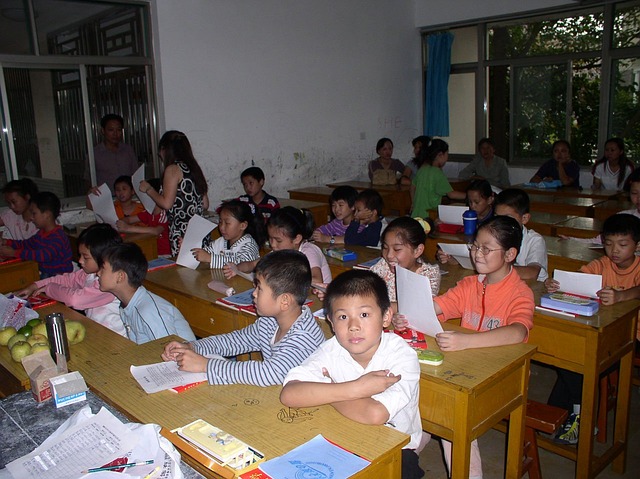
Every morning,Leanne Brickland and he sister would bicycle to school with the same words ringing in their ears:“watch out crossing the road.Don't speak to strangers”.“Mum would stand at the top of the steps and call that out,”says Brickland,now a primary-school teachet and mother of four from Rotorua,New Zealand.Substitute boxers and thongs for undies(内衣),and the nagging fears that haunt parents haven't really changed.What has altered,dramatically,is the confidence we once had in our children's ability to fling themselves at life without a grown-up holding their hands
Worry-ridden Parents and Stifled Kids
By today'sstandards,the childhood freedoms Brickland took for granted practically verge on parental neglect.Her mother worked,so she and her sister had a key to let themselves in after school and were expected todo their homework and put on the potatoes for dinner.At the family's beach house near Wellington,the two girls,from the age of five or six,would disappear for hours to play in the lakes and sands.
A generation later,Brickland's children are growing up in a world more indulged yet more accustomed to peril.The techno-minded generation of PlayStation kids who can conquer entire armies and rocket through spacecan't even be trusted to cross the street alone.“I worry about the road.I worry about strangers.In some ways I think they're missing out,but I like to be able to see them, to know where they are and what they'redoing.”
Call it smother love,indulged-kid syndrome,parental neurosis(神经症).Even though today's children have the universe at their fingertips thanks to the Internet,their physical boundaries are shrinking at a rapid pace.According to British social scientist Mayer Hillman,a child's play zone has contracted so radically that we're producing the human equivalent of henhouse chickens-plump from lack of exercise and without the flexibility and initiative of freerange kids of the past.The spirit of our times is no longer the resourceful adventurer Tom Sawyer but rather the worry-ridden dad and his stifled only child in Finding Nemo.
In short,child rearing has become an exercise in risk minimization,represented by stories such as the father who refused to allow his daughter on a school picnic to the beach for fear she might drown.While it's natural for a parent to want to protect their children from danger,you have to wonder;Have we gone too far?
Parents Wrap Kids up in Cotton Wool
A study conducted by Paul Tranter,a lecturer in geography at the Australian Defence Force Academy in Canberra,showed that while Australian and New Zealand children had similar smounts of unsupervised freedom,it was far less than German of English kids.For example,only a third of ten-year-olds in Australia and New Zealand were allowed to visit places other than school alone,compared to 80 percent in Germany.
Girls were even more restricted than boys,with parents fearing assault or molestation(骚扰),while traffic dangers were seen as the greatest threat to boys.Bike ownership has doubled in a generation,but“independent mobility”---the ability to roam and explore unsupervised---has radically declined.In Auckland,for example,many primary schools have done away with bicycle racks because the streets are considered too unsafe.And in Christchurch,New Zealand's most bike-friendly city,the number of pupils cycling to school has fallenfrom more than 90 percent in the late 1970s to less than 20 percent.Safely strapped into the family 4x4,children are instead driven from home to the school gate,then off to ballet,soccer or swimming lessons--rarely straying from watchful adult eyes.
In the U.S.Journal of Physical Education,Recreation&Dance,New Jersey assistant principal and hockey coach Bobbie Schultz writes that playing in the street after school with neighbourhood kids--creating their own rules,making their own decisions and settling disputes--was where the real learning took place.“The street was one of the greatest sources of my life skills,”she says.“I don't see‘on-the-street play’anymore.I see adult-organized activities.Parents don't realize what an integral part of character development their children are missing.”
Armoured with bicycle helmets,car seats,“safe”playgrounds and sunscreen,children are getting the messageloud and clear that the world is full or peril--and that they're ill-equipped to handle it alone.Yet research consistently shows young people are much more capable than we think,says professor Anne Smith,directorof New Zealand's Children's Issues Centre.“The thing that many adults have difficulty with is that children can't learn to be grown-up if they're excluded and protected all the time.”
Educational psychologist Paul Prangley reckons it's about time the kid gloves came off.He believes parenting has taken on a paranoid(患妄想狂的)edge that's creating a generation of naive,insecure youngsters whoare subconsciously being taught they're incapable of handing things by themselves.“Flexibility and the ability to resist pressure and temptation are learned skills,”Prangley explains.“If you wrap kids up in cotton wool and don't give them the opportunity to take risks,they're less equipped to make responsible decisions later in life.”
Parents Should Gain Proper Perspective
Sadly,high-profile cases of children being kidnapped and murdered--such as ten-year-old Holly Wells and Jessica Chapman in the United Kingdom;five-year-old Chloe Hoson in Australia,whose body was found just 200 metres from where she lived;and six-year-old Teresa Cormack in New Zealand,who was snatched off the street on her way to school--only serve to reinforce parents'fears.Teresa Cormack's death,for example,was one of the rare New Zealand cases of random child kidnap.In Australia,the odds of someone under the age of 15 being murdered by a stranger have been estimated at one in four million.A child is at far greater risk from afamily member or someone they know.
However,parental fear is contagious.In one British study,far more children feared an attack by a stranger than being hit by a car.“We are losing our sense of perspective,”write Jan Parker and Jan Stimpson in their parenting book,Raising Happy Children.“Every parent has to negotiate their own route between equipping children with the skills they need to stay safe and not restricting or terrifying them unnecessarily in the process.”
Dr.Claire Freeman,a planning expert at the University of Otago,points to the erosion of community responsibility as another casualty of that mutual distrust.Not so long ago,adults knew all the local kids and werethe informal guardians of the neighbourhood.“Now,particularly if you are a man,you may hesitate to offer help to a lost child for fear your motives might be questioned.”
More Space and More Attention to Kid's Needs
As a planner in the mid-1990s,Freeman became concerned about the loss of green space to development and the erosion of informal places to play.In a study that looked at how children in the British city of Leeds spent their summer holidays,compared with their parents' childhood experiences,she found the freedom to explore had been severely contracted--in some cases,down to the front yard.Freeman says she cannot remember being inside the house as a child,or being alone.Growing up was about being part of a group.Now a mother offour,Freeman believes the “domestication of play”is robbing kids of their sense of belonging within a society.
Nevertheless,Freeman says children's needs are starting to get more emphasis.In the Netherlands,child-friendly “home zones”have been created where priority is given to pedestrians,rather than cars.And ponds arebeing incorporated back into housing estates on the principle that children should learn to be safe aroundwater,rather than be surrounded by a barren landscape.After all ,as one of the smarter fosh says in Finding Nemo there's one problem with nothing ever will.
1.According to Brickland,parents nowadays have changed their____________.
A)standards of the children's proper dressing
B)worry about the children's personal safety
C)ways to communicate with children
D)confidence in the children's ability
2.When Brickland and her sister were little,they kept the home key because_____________.
A)they wanted to be trusted
B)their mother had to work
C)their mother didn't live at home
D)they were very naughty and wild
3.Mayer Hillman indicates that children now have less and less_____________.
A)space for playing
B)contact with animals
C)concern about others
D)knowledge about nature
4.Paul Tranter finds that eighty percent of the children were allowed to visit places other than school alone in_____________.
A)Australia
B)New Zealand
C)Germany
D)Britain
5.What is ranked by parents as the greatest threat to boys?
A)Gang crimes.
B)Online games.
C)Extreme sports.
D)Dangerous traffics.
6.Bobbie Schultz points out that real learning takes place in______________.
A)on-the-street play
B)adult-organized activities
C)student-centered teaching
D)home and nature
7.What accident had happened to a little girl called Chloe Hoson?
A)She was robbed on her way to school.
B)She was kidnapped and murdered.
C)She fell a victim to domestic violence.
D)She disappeared for no reason.
8.Claire Freeman thinks that lack of mutual trust results in__________________.
9.Freeman concludes that kids are robbed of their sense of belonging to the society by___________________.
10.Netherlands has placed the rights of pedestrians before those of cars in such areas called____________.
答案:
1.[D][定位]首段末句。

迟到15分钟后禁止入场。
大学英语四、六级考试流程:
(1)8:40 考生入场,核对听力调频并试音。
(2)9:00 下发考试材料。
(3)9:10 考试正式开始,考生开始作答作文。
(4)9:35 监考老师口头提醒5分钟后开始听力考试。
(5)9:40 听力考试开始,考生注意及时填涂答题卡1。
(6)10:10 听力考试结束,监考老师收回答题卡1。
(7)10:15 考试继续进行,考生完成阅读理解和翻译部分。
(8)11:15 监考老师口头提示考生10分钟后结束考试。
(9)11:25 考试结束,监考老师收回试题册及答题卡2。
考试当天必须按照规定时间入场,四级入场时间为 8:45,六级入场时间为 14:45。考试入场开始 15 分钟后禁止入场,即上午 9:00,下午 15:00 后禁止入场。迟到考生将无法进入考场,无法参加考试。
扩展资料:
四、六级考试没有明确要求进考场的时间。一般提前30分钟进考场即可,只准携带考试必需的文具用品,如黑色字迹签字笔、2B铅笔、橡皮、卷笔刀、直尺,不准携带任何书籍、笔记、报纸、草稿纸、计算尺、计数器和录音器材等,禁止携带录放音机、电子记事本以及各种无线通信工具等进入考场。
新改革的大学英语六级考试时间分配如下:
14:40 考生入场,核对听力调频并试音。
15:00 下发考试材料。
15:10 考试正式开始,考生开始作答作文。
15:35 监考老师口头提醒5分钟后开始听力考试。
15:40 听力考试开始,考生注意及时填涂答题卡1。
16:10 听力考试结束,监考老师收回答题卡1。
16:15 考试继续进行,考生完成阅读理解和翻译部分。
17:15 监考老师口头提示考生10分钟后结束考试。
17:25 考试结束,监考老师收回试题册及答题卡2。
扩展资料:
题型:
1、单词及词组听写
原复合式听写调整为单词及词组听写,短文长度及难度不变。要求考生在听懂短文的基础上,用所听到的原文填写空缺的单词或词组,共10题。短文播放三遍。
2、长篇阅读
原快速阅读理解调整为长篇阅读理解,篇章长度和难度不变。篇章后附有10个句子,每句一题。每句所含的信息出自篇章的某一段落,要求考生找出与每句所含信息相匹配的段落。有的段落可能对应两题,有的段落可能不对应任何一题。
3、翻译
原单句汉译英调整为段落汉译英。翻译内容涉及中国的历史、文化、经济、社会发展等。四级长度为140-160个汉字;六级长度为180-200个汉字。
新改革的大学英语六级考试时间分配如下:
6月15日下午15:10——17:25,时长共:130分钟
14:40——15:00 试音时间
15:00——15:10 阅读考场注意事项,发放考卷,贴条形码
15:10——15:40 考试阶段
15:40——16:10 听力测试
16:10——16:15 考试暂停5分钟,收答题卡1(即作文和听力) 听力结束后完成剩余考项(阅读和翻译)
17:25全部考试结束。
大学英语六级3点10分开始考试,听力是3点40开始,所以听力考试开始前是有时间浏览下听力题目和答案选项的。
听力部分 =248.5分
听力部分占整套试题的35%,每个题都是7.1分。
1、长对话 8% 8个题目 每小题7.1分。
2、听力篇章 7% 共7小题,每小题7.1分。
3、讲话、报道、讲座 20% 共10个小题,每小题14.2分
以上就是2017六级英语考试答案的全部内容,解析:空白处应为名词(词组)。原文该句中的as another casualty of,表明mutual distrust导致the erosion of community responsibility,题目中的lack of mutual trust是对mutual distrust的同义改写,由此可见,the erosion of community responsibility为本题答案。内容来源于互联网,信息真伪需自行辨别。如有侵权请联系删除。