多媒体英语?多媒体用英语表达为"multimedia";。关于multimedia的详细解释如下:发音:英式读音为[?m?lti?mi?di?],美式读音为[?m?lti?mi?di?]。在发音时,需要注意重音在第一个音节上,且"multi-"部分发音为[m?lti],而"-media"部分发音为[mi?di?]。那么,多媒体英语?一起来了解一下吧。
http://zh.wikipedia.org/wiki/%E5%A4%9A%E5%AA%92%E4%BD%93
http://books.google.com.sg/books?hl=en&id=L6O-R8EQCzwC&dq=Multimedia&printsec=frontcover&source=web&ots=HLMDAUKO_x&sig=POt4qRhHToWW285HDV0rhOK73_A
http://books.google.com.sg/books?hl=en&id=O__G_uZWSk0C&dq=Multimedia&printsec=frontcover&source=web&ots=BWKM7BeGY3&sig=qtxAVyhZrV3LWbXuBz4uHBxAfbQ
http://books.google.com.sg/books?hl=en&id=TgmHJG4awDcC&dq=Multimedia&printsec=frontcover&source=web&ots=HIcXjILA2Y&sig=ShC2Mxxjc3gKPUkS48NoHNomF_I
http://books.google.com.sg/books?hl=en&id=ymJ9o-w_6WEC&dq=Multimedia&printsec=frontcover&source=web&ots=lj5Nvmkxwf&sig=ejfe54C5KUzZK7VX9kSxw44jmVY#PPR7,M1
http://books.google.com.sg/books?hl=en&id=xJs9AAAAIAAJ&dq=Multimedia&printsec=frontcover&source=web&ots=1MHWwYiIkp&sig=j-HpNFiTkC3QX3x3BJJzwsVnsVY
Multimedia is media that utilizes a combination of different content forms. The term can be used as a noun (a medium with multiple content forms) or as an adjective describing a medium as having multiple content forms. The term is used in contrast to media which only utilize traditional forms of printed or hand-produced text and still graphics. In general, multimedia includes a combination of text, audio, still images, animation, video, and interactivity content forms.
Multimedia is usually recorded and played, displayed or accessed by information content processing devices, such as computerized and electronic devices, but can also be part of a live performance. Multimedia (as an adjective) also describes electronic media devices used to store and experience multimedia content. Multimedia is similar to traditional mixed media in fine art, but with a broader scope. The term "rich media" is synonymous for interactive multimedia. Hypermedia can be considered one particular multimedia application.
Categorization
Multimedia may be broadly divided into linear and non-linear categories. Linear active content progresses without any navigation control for the viewer such as a cinema presentation. Non-linear content offers user interactivity to control progress as used with a computer game or used in self-paced computer based training. Non-linear content is also known as hypermedia content.
Multimedia presentations can be live or recorded. A recorded presentation may allow interactivity via a navigation system. A live multimedia presentation may allow interactivity via interaction with the presenter or performer.
Features
Multimedia presentations may be viewed in person on stage, projected, transmitted, or played locally with a media player. A broadcast may be a live or recorded multimedia presentation. Broadcasts and recordings can be either analog or digital electronic media technology. Digital online multimedia may be downloaded or streamed. Streaming multimedia may be live or on-demand.
Multimedia games and simulations may be used in a physical environment with special effects, with multiple users in an online network, or locally with an offline computer, game system, or simulator.
The various formats of technological or digital multimedia may be intended to enhance the users experience, for example to make it easier and faster to convey information. Or in entertainment or art, to transcend everyday experience.
Enhanced levels of interactivity are made possible by combining multiple forms of media content. Online multimedia is increasingly becoming object-oriented and data-driven, enabling applications with collaborative end-user innovation and personalization on multiple forms of content over time. Examples of these range from multiple forms of content on web sites like photo galleries with both images (pictures) and title (text) user-updated, to simulations whose co-efficients, events, illustrations, animations or videos are modifiable, allowing the multimedia "experience" to be altered without reprogramming. In addition to seeing and hearing, Haptic technology enables virtual objects to be felt. Emerging technology involving illusions of taste and smell may also enhance the multimedia experience.
Terminology
History of the term
In 1965 the term Multi-media was used to describe the Exploding Plastic Inevitable, a performance that combined live rock music, cinema, experimental lighting and performance art.
In the intervening forty years the word has taken on different meanings. In the late 1970s the term was used to describe presentations consisting of multi-projector slide shows timed to an audio track. In the 1990s it took on its current meaning. In common usage the term multimedia refers to an electronically delivered combination of media including video, still images, audio, text in such a way that can be accessed interactively.[1] Much of the content on the web today falls within this definition as understood by millions.
Some computers which were marketed in the 1990s were called "multimedia" computers because they incorporated a CD-ROM drive, which allowed for the delivery of several hundred megabytes of video, picture, and audio data.
Word usage and context
Since media is the plural of medium, the term "multimedia" is a pleonasm if "multi" is used to describe multiple occurrences of only one form of media such as a collection of audio CDs. This is why it's important that the word "multimedia" is used exclusively to describe multiple forms of media.
The term "multimedia" is also ambiguous. Static content (such as a paper book) may be considered multimedia if it contains both pictures and text or may be considered interactive if the user interacts by turning pages at will. Books may also be considered non-linear if the pages are accessed non-sequentially. The term "video", if not used exclusively to describe motion photography, is ambiguous in multimedia terminology. Video is often used to describe the file format, delivery format, or presentation format instead of "footage" which is used to distinguish motion photography from "animation", motion illustrations. Multiple forms of information content are often not considered multimedia if they don't contain modern forms of presentation such as audio or video. Likewise, single forms of information content with single methods of information processing (e.g. non-interactive audio) are often called multimedia, perhaps to distinguish static media from active media.
Usage
Multimedia finds its application in various areas including, but not limited to, advertisements, art, education, entertainment, engineering, medicine, mathematics, business, scientific research and spatial temporal applications. Several examples are as follows:
Creative industries
Creative industries use multimedia for a variety of purposes ranging from fine arts, to entertainment, to commercial art, to journalism, to media and software services provided for any of the industries listed below. An individual multimedia designer may cover the spectrum throughout their career. Request for their skills range from technical, to analytical, to creative.
Commercial
Much of the electronic old and new media utilized by commercial artists is multimedia. Exciting presentations are used to grab and keep attention in advertising. Industrial, business to business, and interoffice communications are often developed by creative services firms for advanced multimedia presentations beyond simple slide shows to sell ideas or liven-up training. Commercial multimedia developers may be hired to design for governmental services and nonprofit services applications as well.
Entertainment and fine arts
In addition, multimedia is heavily used in the entertainment industry, especially to develop special effects in movies and animations. Multimedia games are a popular pastime and are software programs available either as CD-ROMs or online. Some video games also use multimedia features. Multimedia applications that allow users to actively participate instead of just sitting by as passive recipients of information are called Interactive Multimedia. In the Arts there are multimedia artists, whose minds are able to blend techniques using different media that in some way incorporates interaction with the viewer. One of the most relevant could be Peter Greenaway who is melding Cinema with Opera and all sorts of digital media. Another approach entails the creation of multimedia that can be displayed in a traditional fine arts arena, such as an art gallery. Although multimedia display material may be volatile, the survivability of the content is as strong as any traditional media. Digital recording material may be just as durable and infinitely reproducible with perfect copies every time.
Education
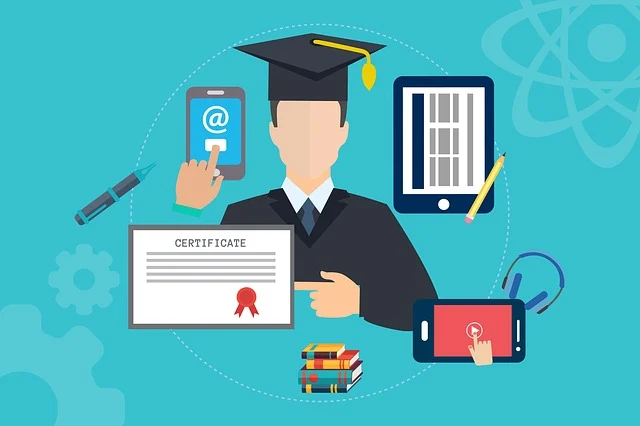
In Education, multimedia is used to produce computer-based training courses (popularly called CBTs) and reference books like encyclopedia and almanacs. A CBT lets the user go through a series of presentations, text about a particular topic, and associated illustrations in various information formats. Edutainment is an informal term used to describe combining education with entertainment, especially multimedia entertainment.
Learning theory in the past decade has expanded dramatically because of the introduction of multimedia. Several lines of research have evolved (e.g. Cognitive load, Multimedia learning, and the list goes on). The possibilities for learning and instruction are nearly endless.
Engineering
Software engineers may use multimedia in Computer Simulations for anything from entertainment to training such as military or industrial training. Multimedia for software interfaces are often done as a collaboration between creative professionals and software engineers.
Industry
In the Industrial sector, multimedia is used as a way to help present information to shareholders, superiors and coworkers. Multimedia is also helpful for providing employee training, advertising and selling products all over the world via virtually unlimited web-based technologies.
Mathematical and Scientific Research
In Mathematical and Scientific Research, multimedia are mainly used for modelling and simulation. For example, a scientist can look at a molecular model of a particular substance and manipulate it to arrive at a new substance. Representative research can be found in journals such as the Journal of Multimedia.
Medicine
In Medicine, doctors can get trained by looking at a virtual surgery or they can simulate how the human body is affected by diseases spread by viruses and bacteria and then develop techniques to prevent it.
Miscellaneous
In Europe, the reference organization for Multimedia industry is the European Multimedia Associations Convention (EMMAC).
An observatory for jobs in the multimedia industry provides surveys and analysis about multimedia and ITC jobs.[1]
Structuring information in a multimedia form
Multimedia represents the convergence of text, pictures, video and sound into a single form. The power of multimedia and the Internet lies in the way in which information is linked.
Multimedia and the Internet require a completely new approach to writing. The style of writing that is appropriate for the 'on-line world' is highly optimized and designed to be able to be quickly scanned by readers.
A good site must be made with a specific purpose in mind and a site with good interactivity and new technology can also be useful for attracting visitors. The site must be attractive and innovative in its design, function in terms of its purpose, easy to navigate, frequently updated and fast to download.
When users view a page, they can only view one page at a time. As a result, multimedia users must create a ‘mental model of information structure’
Patrick Lynch, author of the Yale University Web Style Manual, states that users need predictability and structure, with clear functional and graphical continuity between the various components and subsections of the multimedia production. In this way, the home page of any multimedia production should always be a landmark, able to be accessed from anywhere within a multimedia piece.
----------------
- Multimedia is more than one concurrent presentation medium (for example, on CD-ROM or a Web site). Although still images are a different medium than text, multimedia is typically used to mean the combination of text, sound, and/or motion video. Some people might say that the addition of animated images (for example, animated GIF on the Web) produces multimedia, but it has typically meant one of the following:
Text and sound
Text, sound, and still or animated graphic images
Text, sound, and video images
Video and sound
Multiple display areas, images, or presentations presented concurrently
In live situations, the use of a speaker or actors and "props" together with sound, images, and motion video
Multimedia can arguably be distinguished from traditional motion pictures or movies both by the scale of the production (multimedia is usually smaller and less expensive) and by the possibility of audience interactivity or involvement (in which case, it is usually called interactive multimedia). Interactive elements can include: voice command, mouse manipulation, text entry, touch screen, video capture of the user, or live participation (in live presentations).
Multimedia tends to imply sophistication (and relatively more expense) in both production and presentation than simple text-and-images. Multimedia presentations are possible in many contexts, including the Web, CD-ROMs, and live theater. A rule-of-thumb for the minimum development cost of a packaged multimedia production with video for commercial presentation (as at trade shows) is: $1,000 a minute of presentation time. Since any Web site can be viewed as a multimedia presentation, however, any tool that helps develop a site in multimedia form can be classed as multimedia software and the cost can be less than for standard video productions.
For multimedia Web sites, popular multimedia (sound or sound and motion video or animation) players include: MPEG, Quicktime, and Shockwave.
http://www.google.com.sg/search?q=Multimedia&hl=en&start=20&sa=N
DynEd多媒体英语系列课程以其独特的教育理念和科学的教学方法,致力于满足学生的个性化学习需求。该课程基于社会语言学理论,强调语言作为交流工具的功能,通过大量练习来培养学生的语言技巧。课程内容根据每个学生的能力和需要进行自动调整,确保学习的针对性和高效性。
DynEd在法国被官方认定为唯一的多媒体英语教学系统,采用混合式教学模式,包括教师指导下的计算机自学和口语练习。每个学生在开始学习前会进行分级测试,以确定适合的学习路径和难度。这种个性化的学习方式,使得每个学生都能通过电脑与一个发音纯正的“英语老师”互动,从而满足不同学习者的需求。
课程内容丰富多样,涵盖牛津、斯坦福等权威资源,从成人通用英语到商务英语、儿童英语、中学英语,甚至行业英语和教师培训课程,都提供了全面的学习材料。 DynEd还拥有完整的测试系统,包括入学测试、单元测试和口语测试,帮助学生了解学习进度,及时发现和解决问题。
教学模式上,学生在教师的指导下,结合上机自学和口语实践,通过多媒体语音实验室进行自主学习。定期的小组口语活动则进一步强化了语言的实际运用,使学生能在真实交流中提升语言技能。
无论是在课堂上还是在任何设备上,DynEd多媒体英语课程都能无缝衔接,让学习者随时随地利用碎片时间提升英语水平。
多媒体用英语表达为"multimedia"。
关于multimedia的详细解释如下:
发音:英式读音为[?m?lti?mi?di?],美式读音为[?m?lti?mi?di?]。在发音时,需要注意重音在第一个音节上,且"multi-"部分发音为[m?lti],而"-media"部分发音为[mi?di?]。
词性:multimedia即可作为名词使用,也可作为形容词使用。
作为名词:意为“多媒体”。它指的是结合文本、图形、音频、视频和动画等多种信息形式的技术和媒介。
作为形容词:意为“多媒体的;使用多媒体的”。它用来描述与多媒体相关的技术、设备或内容。
例句:
Multimedia information technology is a hot field of information technology.(多媒体信息技术是信息技术的热点之一。)这句话展示了multimedia作为名词的用法,描述了多媒体信息技术在信息技术领域的重要性。

可以去google schlar搜索 很多的 具体的我就 不提供了
http://scholar.google.cn/
google scholar网址
英语缩写"MI"通常代表"Multimedia Integrated",中文即“多媒体集成”。这个术语主要用于描述将多种媒体形式(如音频、视频、图像等)集成到一个系统或应用中的过程。MI的中文拼音为"duō méi tǐ jí chéng",在英语中的流行度为66,属于Computing领域的缩写词,特别在软件开发和信息技术相关应用中常见。
在信息产业结构调整的研究中,多媒体集成技术起到了推动作用,比如在多媒体综合通信系统中,链路管理软件的设计与实现,以及在多媒体集成环境下的CAI系统的构建。此外,MI也应用于多媒体综合服务通信系统中,如传输与控制技术的探讨,以及医学课程中多媒体整合教学的新模型构建。
总结来说,"MI"作为"Multimedia Integrated"的缩写,强调了在数字化时代,多媒体技术在各个领域中的融合与集成应用。这些信息适用于学习和研究,但请读者自行辨别信息来源,以确保其准确性和适用性。
以上就是多媒体英语的全部内容,多媒体用英语表示为”multimedia”。读音:英式读音为[?m?lti?mi?di?],美式读音为[?m?lti?mi?di?]。词性:multimedia即可作为名词使用,也可作为形容词使用。作为名词时,意为“多媒体”;作为形容词时,意为“多媒体的;使用多媒体的”。内容来源于互联网,信息真伪需自行辨别。如有侵权请联系删除。